Bedding Guide
A Practical Guide to Building a Comfortable, Long-Lasting Bed
A beautifully made bed is not simply a matter of crisp sheets or an artful arrangement of pillows. Comfort comes from a considered combination of fibers, fit, useful layers and care. Start with what feels good against your skin, then choose pieces that suit the way you sleep—and the amount of maintenance you are realistically willing to give them.
Begin with your sleep preferences
The most satisfying bedding is personal. One sleeper may prefer the cool, crisp touch of percale; another may want the smoother drape of sateen. Someone who tends to feel warm may gravitate toward breathable, moisture-managing fibers, while a person who likes a more substantial, gently textured surface may find linen appealing. These preferences are more useful starting points than a trend, a thread-count headline or a picture of a perfectly styled room.
Think about your nights as they actually are. Do you wake feeling too warm? Do you like a freshly pressed, tucked-in bed, or a softer, relaxed look? Is laundry day frequent and routine, or do you need bedding that can be rotated and cared for with minimal fuss? Consider the bedroom’s temperature, your usual sleepwear, how often you wash sheets and whether you share the bed with a restless sleeper or a pet. A textile that fits your habits is more likely to remain a favorite.
Touch matters, but so does construction. Fiber content tells you what the fabric is made from; weave and finishing help explain how it may feel and behave. A label that says “cotton,” for instance, does not by itself tell you whether the sheet will feel crisp or silky. Read the full specification, including care instructions, rather than relying on a single descriptor.
Choose sheets by fiber, weave and feel
Sheets sit closest to the body, so they are the natural place to begin building a bed. Linen, cotton percale and cotton sateen each create a distinct experience. None is universally best; the right choice is the one whose hand feel, temperature and care needs work for you.
Linen: airy texture and an easy drape
Linen is made from flax fibers and is known for a slightly irregular, tactile surface. Its open, breathable character and moisture-handling qualities make it a popular choice for sleepers who want a less polished, more relaxed feel. Linen often begins with a crisp or textured hand and softens through use and laundering. Its natural creases are part of the appeal: a linen bed can look considered without looking overly formal.
Weight and finish make a difference. A lighter linen may feel more fluid, while a denser fabric can feel more substantial. Stonewashing or garment washing can give new bedding a softer, lived-in quality, but the exact feel varies by maker and construction. If you are drawn to linen, check the care label and decide whether you are comfortable with its relaxed appearance and specific laundering needs.
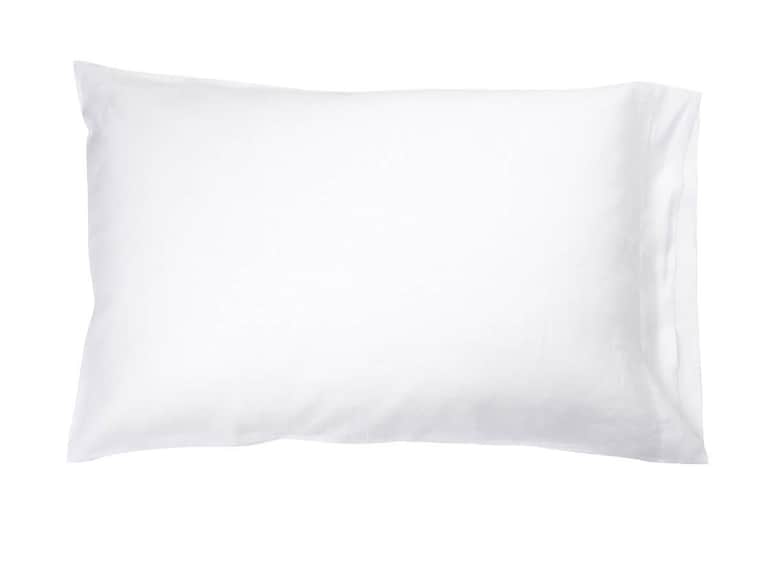
For example, the Classics Victoria Pillow-case combines a fine linen weave with a hemstitch finish. It illustrates how a simple, breathable textile can feel quietly finished through detail rather than ornament. When choosing any linen pillowcase or sheet, confirm the size, fiber content and care guidance before purchase.
Cotton percale: crisp and matte
Percale is a plain weave commonly associated with a crisp, cool-to-the-touch feel and a matte finish. It can suit people who like the sensation of fresh, neatly made sheets. Cotton percale is not a guarantee of one particular level of softness: fiber quality, yarn, finishing and washing all affect the final hand. Some percale becomes more comfortable with repeated laundering, while still retaining its characteristic structure.
Because percale is a weave rather than a fiber, the label should still identify the material. Look for clear fiber disclosure and follow the manufacturer’s directions, especially when the fabric has a print, dark color or decorative finish.
Cotton sateen: smooth with a gentle sheen
Sateen is also a weave, typically recognized by a smoother face and a soft, subtle sheen. Compared with percale, it may feel more fluid and polished against the skin. That finish can be appealing if you prefer a supple sheet rather than a crisp one. Sateen is not synonymous with silk, and it does not automatically indicate superior quality; fiber, yarn and construction still matter.
The DownTown Company Chelsea Pillowcases and Shams offer one example of long-staple cotton sateen, with a tailored trim and a smooth finish. Their details may suit someone seeking a more polished look, while the same selection principles apply: check dimensions, construction and care before assembling a full set.
Why thread count is only one detail
Thread count describes the number of threads in a measured area of fabric, but it is not a complete measure of comfort or durability. The type and quality of yarn, the weave, finishing and manufacturing all contribute to how a sheet performs. Use thread count as one piece of information—not as a shortcut for judging the whole textile. A clearly described fabric with reliable care instructions is often more useful than a number without context.
Get the fit right before adding layers
A sheet that slips off the mattress or strains at the corners can undermine even the most appealing fabric. Before buying a fitted sheet, measure the mattress and check its depth. Include any topper or mattress pad that will remain underneath the sheet, since these change the height the fitted sheet must cover. Compare the measurement with the stated pocket depth and allow for the mattress’s shape and any unusually thick padding.
Also confirm that the set corresponds to the mattress size you own. Bed names and dimensions can vary by market, and a fitted sheet is less forgiving than a flat sheet when the fit is wrong. If you use a mattress protector, make sure it is included in your measurement. For a shared bed, a sheet with secure elastic around the perimeter may help keep the corners in place, but the actual fit remains the deciding factor.
Before removing tags or washing new bedding, check the package contents. A sheet set may include a flat sheet, fitted sheet and pillowcases, but quantities and pillowcase dimensions can differ between sizes and brands. Decorative shams are often sold separately, and their dimensions may not match the pillowcases used for sleeping.
Build a bed in useful, flexible layers
A comfortable bed does not need a complicated stack. The most practical arrangement is often a fitted sheet, an optional top sheet, and a duvet or coverlet that can be adjusted as the room temperature changes. Add a mattress protector if you want a washable barrier between the mattress and bedding. Each layer should earn its place through comfort, function or ease of care.
- Mattress protector: A removable, washable layer can help shield the mattress from everyday spills and wear. Choose one that fits its depth and does not make the surface feel less comfortable to you.
- Fitted sheet: This is the foundation of the sleep surface. Prioritize correct dimensions, suitable fabric and a secure fit.
- Top sheet: Optional, but useful if you like a light layer between you and a duvet, or want to wash the sheet more often than the cover.
- Duvet and cover: A duvet supplies warmth; its removable cover protects it and gives the bed a changeable finish. Check that the cover and insert are compatible in size.
- Coverlet or quilt: A lighter layer can provide modest warmth or a tidy finish. It can be folded back or removed as the season changes.
- Pillowcases and shams: Pillowcases are functional covers for sleeping pillows; shams are often used as decorative or layering pieces. Check closure style and dimensions for each.
Layering is most effective when it is adaptable. If you sleep warm, a breathable sheet and a lighter cover may be enough, with an additional blanket nearby for colder nights. If your room cools substantially, combine a duvet with a removable coverlet rather than relying on one heavy layer throughout the year. The goal is not to imitate a showroom bed; it is to make temperature and laundering easy to manage.
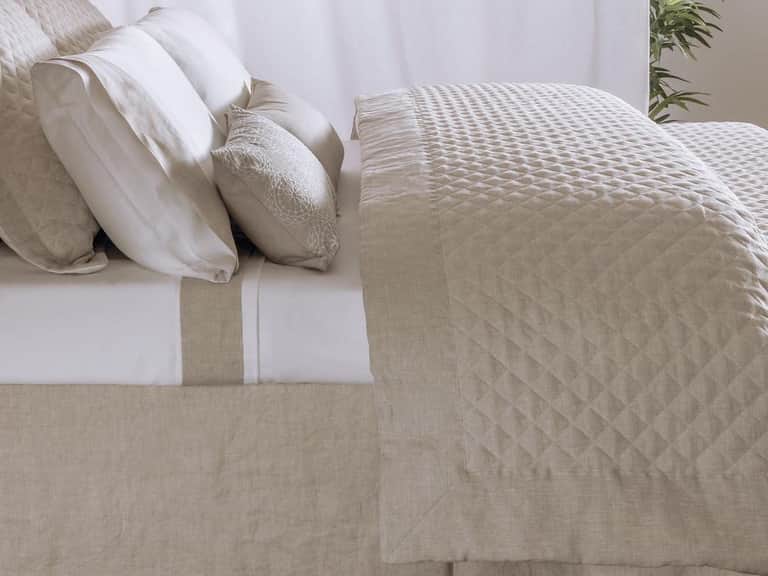
A bed skirt is an optional finishing element, not a sleep layer. It can create a more continuous visual line and conceal the bed frame or under-bed storage. The Bovi Hudson Linen Bed Skirt, for instance, is made from European linen and has a tailored, lined construction. Consider its drop and the height of the bed base before selecting one; the best fit should hang evenly without pooling or riding above the floor.
Coordinate without making the bed feel overdesigned
A calm bed can be built from a small palette and a mix of textures. Begin with a base color that works with the room, then add variation through weave, weight or a restrained trim. White, soft neutrals and muted colors are easy to combine, but there is no requirement to keep every layer identical. Linen’s matte texture can sit comfortably beside smoother cotton; a plain sheet can balance a patterned coverlet.
Use decorative pillows sparingly if they interfere with your evening routine. A few well-scaled shams can create a finished look, while a mountain of cushions may become a daily task. Consider where each pillow will go at night and whether its cover can be washed as easily as the bedding beneath it. Coordinated does not have to mean matching: repeating a tone or material is often enough to make the arrangement feel intentional.
Details such as hemstitching, a flange, a contrast border or a tailored trim can bring definition to simple bedding. They are aesthetic choices, not substitutes for fit and fabric quality. If your bed is used every day, think about whether decorative edges will be comfortable against the face and how they should be laundered.
Care well, and your bedding can last longer
Good care begins with the label. Washing temperature, cycle, detergent and drying recommendations vary by fiber, dye, finish and construction. When a care instruction seems more specific than your usual laundry routine, follow it; a gentle cycle and lower heat can be safer for delicate details or fabrics that may shrink. Avoid assuming that all natural fibers can be treated identically.
- Wash bedding separately from heavy items. Overloading the machine can prevent an even wash and create unnecessary friction. Make sure sheets have room to move.
- Use an appropriate amount of detergent. Follow the product and machine directions. Excess detergent can be difficult to rinse away.
- Sort by color and care needs. Washing dark shades separately helps reduce the chance of color transfer, particularly when bedding is new.
- Choose the recommended temperature and cycle. A cooler, gentle wash may be suitable for some linen and finished textiles; other items may have different instructions.
- Dry with care. Line drying can reduce reliance on a tumble dryer, where practical. If machine drying is permitted, avoid over-drying and use the recommended heat setting.
- Store only when fully dry. Allow bedding to dry completely before folding it away, and keep it in a clean, dry place.
Wrinkles are a matter of preference as much as maintenance. Linen naturally creases, and many owners choose to embrace that relaxed finish. If you prefer a smoother look, ironing or steaming while the fabric is slightly damp may help, provided the care label allows it. Cotton percale can also be pressed for a crisp finish, while sateen’s smoother appearance may need less attention. Always test a less visible area when using heat on a fabric you have not cared for before.
Stains are easier to address promptly. Blot rather than rub, follow the fabric’s care instructions and use a treatment appropriate to the stain and fiber. Avoid chlorine bleach unless the manufacturer explicitly permits it; it can weaken or discolor some textiles. If the item has embroidery, a delicate finish or a dry-clean-only label, professional advice may be the safer choice.
Rotate pillowcases and sheets regularly, and inspect seams, elastic and closures during laundry. Repairing a loose seam or replacing worn elastic can extend the useful life of an otherwise sound piece. A small rotation of bedding also gives each set time to dry fully and reduces wear from constant use of one favorite.
Shop with durability and responsibility in mind
Long-lasting bedding is a sustainability choice in its own right: using a textile for longer can reduce the need to replace it frequently. Look for transparent information about fiber content, where the fabric was woven or finished, how the product should be cared for and what any certification actually covers. A country-of-origin statement can describe one stage of production; it does not necessarily explain every step in the supply chain.
Certifications can help make claims more legible, but read them precisely. GOTS, for example, is a standard for organic textiles that includes criteria across processing and production; the scope and validity of a specific claim should be checked against current certification information. Other labels may focus on testing for particular substances or on a defined stage of manufacturing. A certification is useful context, not a substitute for a clear product description or proof that an item will suit your needs.
Consider the full ownership experience: whether the item can be washed at home, whether it needs special treatment, whether replacement pieces are available, and whether the material will work through more than one season. A lower-maintenance item that you use for years may be a more practical choice than a fabric whose care demands discourage regular use. Avoid buying a complete new set simply for a seasonal refresh; changing one pillowcase, coverlet or top layer can shift the mood without replacing the foundation.
A simple checklist before you choose
When comparing bedding, pause over these questions. They keep the decision focused on comfort and use rather than styling alone:
- Does the fiber and weave feel right for how I sleep?
- Do I prefer a crisp, matte surface, a smooth finish or a naturally textured hand?
- Will the fitted sheet accommodate my mattress, topper and protector?
- What pieces are included, and which pillowcase or sham sizes do I need?
- Can I follow the recommended washing and drying routine?
- Are the fiber, origin and any certification claims clearly described?
- Can I combine this piece with bedding I already own?
A bed designed around real life
The most inviting bed is not necessarily the most elaborate. It is a well-fitting foundation in a fabric you enjoy, a few adaptable layers and a care routine you can sustain. Linen brings relaxed texture and a breathable feel; cotton percale offers a crisp, matte character; cotton sateen adds smoothness and a gentle sheen. Measure before buying, read labels closely and choose layers that respond to your own sense of temperature and comfort.
With those fundamentals in place, style becomes easier. A clean palette, a carefully chosen detail and bedding that grows softer or more familiar with use can make the bedroom feel considered without making it precious. Build slowly, care thoughtfully, and let the bed earn its place in your daily life.